From 2027, Sydney’s Kensington campus gains a new three-year bachelor route that sits alongside the traditional university offer. UNSW College, the institute of higher education owned and backed by UNSW, begins teaching its Applied Degrees — three AQF level 7 bachelor programmes built around projects, small classes and industry placements rather than lecture-hall exams. The first international intake starts in Term 1, 2027, with classes beginning on 1 March.
This is not a UNSW degree. The award is issued by UNSW College, not by UNSW Sydney, and the distinction matters. What the college does offer is a campus address on Anzac Parade, access to UNSW facilities, clubs and societies, and a teaching model that keeps cohorts around 20 students. For applicants weighing up a Sydney degree against the cost of living and tuition in Australia’s most expensive city, the practical question is what this route actually delivers.
Three programmes, one campus
The college is launching three named degrees, each running for three years (156 weeks) and worth 144 units of credit:
| Programme | CRICOS code | Focus |
|---|---|---|
| Bachelor of Applied Business (Business Management) | 120245C | Management, analytics, HR, project leadership |
| Bachelor of Information Technology (Cyber Defence and Networking) | 120253C | Security operations, networks, cloud, forensics |
| Bachelor of Information Technology (Software Development) | 120244D | Programming, AI, cloud, mobile development |
All three sit at AQF level 7, the same level as a standard Australian bachelor degree. The teaching structure is different, though. Each year is split into two eight-week terms, with two courses per term. Assessment is project-based, with no traditional final exams. Class sizes are around 20 students, compared with the 25–35 typical of a traditional degree.
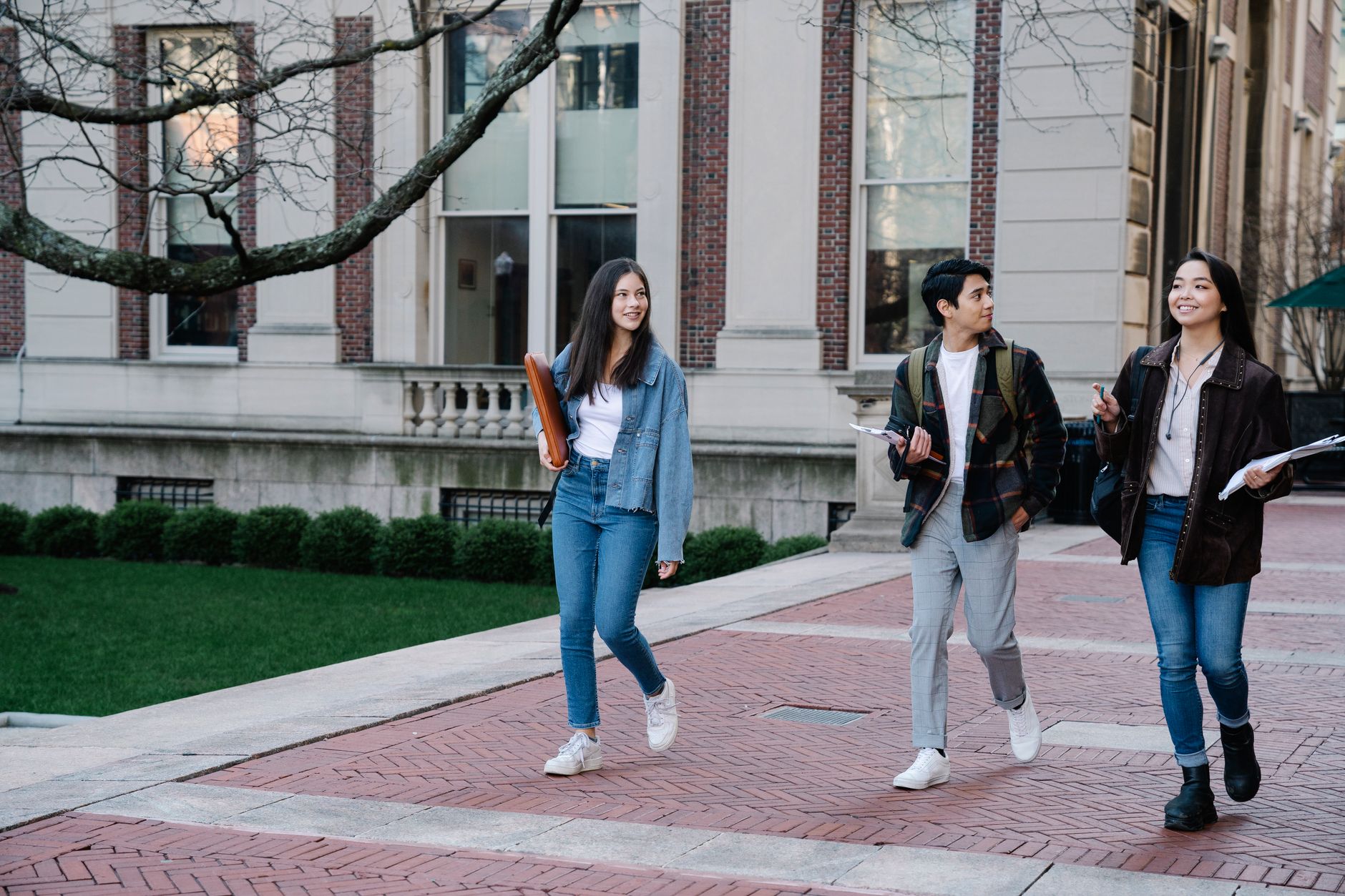
The campus experience is a core part of the pitch. Students study at UNSW College on the Kensington campus and can use UNSW facilities, join its clubs and societies, and work alongside students from the wider university. For someone choosing Sydney partly for the student life, that access is a meaningful part of the package.
How the degrees are built
The applied model shows up most clearly in the assessment design and the industry components. Each degree includes an Industry Project or Industry Placement in Year 2 or Year 3, worth 12 units of credit. The placement runs for eight weeks at around 20 hours per week, adding up to roughly 160 hours of workplace experience. Students can source their own placement, take a UNSW College-facilitated opportunity, or complete an industry or project-based alternative. The final year also includes an eight-week Capstone Project.
The two IT degrees carry additional industry alignment. UNSW College works with AWS Academy, Microsoft Learn for Educators and CompTIA, and the cyber degree also links to (ISC)². Eligible students receive one funded certification exam per relevant course completion — a detail that matters for anyone planning to sit industry credentials alongside their degree.

The course lists reflect the applied emphasis. The software development stream covers object-oriented programming, cloud computing, AI and machine learning, secure cloud architecture, natural language processing and mobile application development. The cyber stream includes systems security, cloud computing, security operations, governance and compliance, digital forensics and incident response. The business degree runs through strategic analysis, people performance, negotiation, digital transformation and a capstone business project.
Entry requirements: the published minimums
The entry requirements below are the published minimums to apply, not admission guarantees and not averages of admitted scores. UNSW College’s own materials carry the note that they are summary data only and that the official website governs full details. Treat the table as a starting point, then check the college’s entry requirements page before applying.
| Qualification | Academic requirement | English requirement |
|---|---|---|
| Australia HSC or equivalent | Band 3 in at least 3 relevant subjects | — |
| UNSW College / Go8 Foundation | Pass in Foundation Studies (Maths for IT streams) | C+ |
| IB Diploma | 14+ over 3 relevant subjects | 4 (HL) or 5 (SL) |
| A Levels | 6 points, min one A level | C |
| China Gao Kao | 60% | Formal English test |
| China Gao San | 70% average of best 4 academic subjects | Formal English test |
| China Dazhuan | 75% | Formal English test |
| China Zhongzhuan | 80% average of best 4 academic subjects | Formal English test |
| Hong Kong HKDSE | 13, best 5 subjects | Overall 4, writing 3 |
| Indonesia SMA3 | 7, average of best 4 subjects | Formal English test |
| Japan High School Year 3 / Kosen | 60% average of best 4 subjects | Formal English test |
| Malaysia STPM | 6, best 4 subjects | C |
| Malaysia UEC | 12, best 3 subjects | B3 |
| Philippines Senior High School (Y12) | 82% average of best 4 subjects | 85% |
| Singapore A-Levels | 6, min one H2 | D or higher |
| South Korea High School Year 3 | 70% average of best 4 subjects | Formal English test |
| Thailand Matayom 6 | 2.5 average of best 6 subjects | Formal English test |
| Vietnam Diploma of General Education (Y12) | 30, best 4 subjects | Formal English test |
| Saudi Arabia GSEC | 90% average of best 4 subjects | Formal English test |
English language scores follow a consistent pattern across tests:
| Test | Overall | Writing | Other components |
|---|---|---|---|
| IELTS | 6.5 | 6.0 | 6.0 |
| PTE Academic | 64 | 54 | 54 |
| TOEFL iBT | 90 | 23 | 13 reading, 12 listening, 18 speaking |
Applicants must meet both the overall score and the individual component requirements where applicable.
Fees and what they cover
Tuition for 2026 is A$34,080 per year, putting the three-year total at A$102,240. The CRICOS register additionally records A$1,000 of non-tuition fees, for an estimated total of A$103,240. Two caveats apply. First, the 2026 figure is the published one; UNSW College states that 2027 tuition fees are still to be updated. Second, fees are reviewed annually and may vary depending on courses chosen.
The college’s launch presentation cites two market figures worth treating with care. It references a forecast of up to 400,000 additional IT workers needed in Australia by 2030, and a finding that only 42% of employers believe business graduates have sufficient workplace skills. Neither carries a cited origin in the presentation, so read them as the college’s own framing of the skills gap rather than independent research or government data.
Scholarships and discounts
Two forms of financial support are available, both confirmed in the college’s August 2026 launch presentation.
The Applied Leadership Award offers up to A$10,000 per year, awarded on merit to a limited number of students. Applicants submit a 500-word personal statement on their motivation for studying a UNSW College Applied Degree, plus a resume or CV.
The UNSW College Family Discount provides up to a 10% tuition discount for a student with a relative who graduated from UNSW College or is currently enrolled in Foundation Studies or a Diploma there. Applied degree students can apply for it. The college’s public family discount page has not yet been updated to cover the applied degrees, so confirm current conditions with the college before relying on the discount. The discount requires proof of the relative’s graduation or enrolment and evidence of the family relationship, and it cannot be combined with the UNSW International Student Award.
Key dates for the first intakes
New students commence in Terms 1 and 4. For the first international intake, the key dates are:
| Term | Orientation | Classes begin | Census date | Term ends |
|---|---|---|---|---|
| Term 1, 2027 | 25 February 2027 | 1 March 2027 | 19 March 2027 | 23 April 2027 |
| Term 4, 2027 | 15 October 2027 | 18 October 2027 | 5 November 2027 | 10 December 2027 |
For students who need English language preparation first, UNSW College offers an online English course (UEEC10) that can be completed from home. The October 2026 intake runs from 12 October to 18 December 2026, finishing in time for the 25 February 2027 orientation and the 1 March class start. A later option runs from 24 May to 30 July 2027, leading into the October 2027 intake. The college’s materials note that the gap between the English course and classes leaves time to apply for a visa and book accommodation and flights — practical advice, though visa requirements themselves sit outside what this article covers.
What to check before you apply
The launch presentation runs ahead of the college’s public website, so some pages may not yet reflect the applied degrees. The official entry requirements page governs the full details of what you need to apply, and the college’s applied degrees overview page is the right place to confirm programme structure and any updates. For the software development degree, note that the CRICOS code is 120244D; the launch deck printed 120243E, which is actually the associate degree code, so the register value is the one to use.
The degree is awarded by UNSW College, an institute of higher education owned and backed by UNSW. It is not a UNSW degree, and nothing in this article should be read as suggesting otherwise. What it offers is a Sydney campus base, a project-based teaching model, embedded industry experience and a three-year route to an AQF level 7 bachelor qualification — with the first cohort starting in March 2027.
Sources
- UNSW College Applied Degrees overview
- Bachelor of Applied Business (Business Management)
- Bachelor of IT (Cyber Defence and Networking)
- Bachelor of IT (Software Development)
- UNSW College entry requirements
- CRICOS register 120245C
- CRICOS register 120253C
- CRICOS register 120244D
- UNSW College Family Discount
- UNSW College scholarships